


Common Misconceptions About Leasing a Chevrolet—Clarified by Auto Experts

Author: Murdock Chevrolet Team
Deciding whether to buy or lease a new Chevrolet SUV or truck often brings up a ton of conflicting advice. If you’re searching for clear answers, you’ve probably bumped into outdated claims about restrictive mileage limits, hidden fees, or the idea that you’re just throwing money away. This guide is built to cut through that noise and debunk the most common leasing myths once and for all.
At Murdock Chevrolet, we spend our days helping drivers figure out what works best for their specific routines. We know that navigating the morning traffic on Interstate 15 (I-15) requires a different strategy than loading up a family vehicle for a weekend outing to Lagoon Amusement Park in nearby Farmington. By breaking down how leasing actually works for modern drivers around Woods Cross, Kaysville, and North Salt Lake, we want to help you make an informed choice rooted in hard facts, not fiction.
Is Leasing a Chevrolet Really Just Renting?
No, leasing a Chevrolet is not renting; it is a structured form of financing where you pay only for the vehicle’s depreciation over a fixed term—typically 24 to 36 months—rather than its total MSRP. When you sign a lease on a new Chevrolet Equinox, you get exclusive use of the SUV, but you also take on the responsibilities of ownership, such as state registration, full-coverage insurance, and routine maintenance like 7,500-mile tire rotations. What this means for Woods Cross drivers is that you can drive a brand-new vehicle backed by a 3-year/36,000-mile Bumper-to-Bumper Limited Warranty for your daily I-15 commute, usually with a notably lower monthly payment than a traditional purchase loan.
To clear up the confusion, it helps to look at the exact differences between borrowing a car for the weekend and financing a lease for your household.
- Term Length and Commitment: Rentals last a few days or weeks. A Chevrolet lease is a multi-year commitment, giving you a reliable daily driver for school drop-offs or loading up gear for a weekend at Lagoon.
- Financial Structure: Renting charges a flat daily rate. Leasing calculates your payment based on the vehicle’s expected depreciation over the contract terms. This is why financial resources like Edmunds often highlight leasing as a way to reduce monthly out-of-pocket costs compared to standard auto loans.
- Maintenance and Upkeep: Rental companies handle all oil changes and wiper replacements behind the scenes. When you lease a Chevrolet Silverado 1500, you manage the scheduled service—ensuring the engine oil and filter are changed according to the Oil Life System—just as if you bought the truck outright.
- Insurance and Registration: Rental cars use the agency’s corporate fleet plates. Lessees must register the vehicle locally in Utah and maintain comprehensive auto insurance that meets specific lease coverage limits.
- Condition and Mileage: Rentals generally offer unlimited miles. Leases come with set mileage limits (frequently 10,000 to 12,000 miles per year) and require returning the vehicle without excessive wear, which easily accommodates a predictable daily commute along the Legacy Parkway.
This financing setup is ideal for drivers who prioritize having the latest technology and safety advancements without long-term ties. Imagine commuting through winter snow in Davis County: leasing allows you to drive a fresh, all-wheel-drive Chevrolet SUV equipped with modern driver-assist features. When the 36-month term ends, you simply hand the keys back and upgrade to the newest model, completely bypassing the hassle of selling or trading in an older used vehicle.
Are Leases Really More Expensive in the Long Run?
Not necessarily. The real answer depends entirely on your driving routine and how often you want to upgrade your vehicle. If you plan to buy a Chevrolet Silverado 1500 and drive it into the ground over a decade, traditional financing will eventually cost less. But if you commute from Woods Cross to Salt Lake City via I‑15 every day and prefer swapping into a fresh model every few years, leasing is frequently the smarter financial move. That means you avoid the unpredictable repair bills that eventually catch up to older vehicles, keeping your household budget firmly intact.
Here is why leasing often proves to be highly cost-effective for Davis County drivers:
- Lower Monthly Payments: Rather than financing the entire purchase price of a new Chevrolet SUV, your lease payment only covers the value the vehicle loses during your specific term. For families managing a budget, this leaves more cash in your pocket for weekend trips to Station Park in Farmington or daily expenses.
- Minimal Repair Risk: A typical 36-month or 36,000-mile lease lines up perfectly with the new Chevrolet 3-year / 36,000-mile Bumper-to-Bumper Limited Warranty. Because you are covered for the duration of your contract, you are highly unlikely to face massive out-of-pocket bills for major component failures.
- Predictable Upkeep: With a lease, your costs are practically set in stone. Aside from your standard payment and insurance, you just need to handle routine maintenance, like replacing engine oil every 7,500 miles. There are no sudden surprises waiting for you at the mechanic.
For anyone who loves having modern safety features or fresh infotainment screens, leasing avoids a massive financial trap: negative equity. Drivers who finance a new vehicle but trade it in after just two or three years frequently end up owing more on their loan than the truck or SUV is actually worth. A lease offers a clean break. When your contract ends, you simply hand over the keys and walk away, never having to worry about trade-in values dropping before your next drive up to the Wasatch Mountains.
Will I Be Penalized for High Mileage on a Chevrolet Lease?

The short answer is no, you are not arbitrarily penalized for driving—you simply agree to a set mileage limit that helps determine the vehicle’s future value, and you pay a clear, predetermined rate if you exceed it. When setting up a Chevrolet lease, you choose an annual mileage bracket that fits your routine, usually 10,000, 12,000, or 15,000 miles per year. What this means for Woods Cross drivers is that you can tailor your contract to match your actual road time, keeping your monthly payments optimized so you never pay for miles you don’t use.
Before signing, it helps to map out your regular routes. If you take the UTA FrontRunner from the Woods Cross station for work and mostly rely on your Chevrolet Equinox for local errands or weekend family outings to Lagoon Amusement Park, a lower mileage limit might be perfect. On the flip side, if you commute daily down I-15 to Salt Lake City or frequently haul camping gear up into the Wasatch Mountains in a Silverado 1500, stepping up to a 15,000-mile allowance makes much more sense.
- Estimate your weekly routine: Calculate your average daily commute along Legacy Parkway or Highway 89 (US-89), multiply it by the weeks you work, and add a healthy 2,000-mile buffer for road trips or unexpected drives.
- Understand the overage rate: Most lease agreements stipulate a fee of 15 to 25 cents for every mile driven over the limit. For example, if your contract charges $0.25 per mile and you go over by 1,000 miles, that is just a $250 fee at the end of your term.
- Compare the math with ownership depreciation: Racking up heavy miles on a purchased SUV drastically lowers its future trade-in value. Paying a small overage fee on a lease is often more affordable than the harsh depreciation hit an owned vehicle takes. You can explore tools on Kelley Blue Book to see exactly how excess mileage drains the resale value of a financed car.
Can I Get Out of a Lease If My Needs Change?
Yes, you can exit a car lease early through options like a lease transfer, an early buyout, or a trade-in, though each choice comes with different financial impacts. Life around Davis County doesn’t always stick to a neat three-year schedule. Maybe a career shift means you are trading a short Woods Cross drive for a longer daily haul down I-15, or a growing family suddenly requires the extra cargo space of a Chevrolet Traverse for weekend outings to Lagoon Amusement Park. Understanding your exit routes matters because returning a vehicle incorrectly can trigger hefty early termination penalties—sometimes totaling thousands of dollars. By reviewing your contract’s specific payoff amount and residual value, you can transition into a more suitable ride without absorbing unnecessary costs.
If your situation changes before your term is up, here are the most common ways to move forward:
- Lease Transfer: Also known as a lease assumption, this path involves legally handing over the remainder of your contract and monthly payments to another qualified driver. Since most financing companies allow this process, it is a practical way to walk away from the commitment while avoiding early cancellation fees.
- Early Buyout: You have the right to purchase the truck or SUV for the predetermined buyout price at any point during the term. This makes financial sense if your vehicle’s current market value exceeds the remaining payoff amount, allowing you to buy the vehicle outright and potentially sell it privately for a profit.
- Trade-In: Local dealerships can frequently roll your current lease into a fresh purchase or a new lease agreement. If you realize your current model is too small to fit your clubs for an afternoon at Bountiful Ridge Golf Course, you can trade it in; the dealer calculates the payoff and applies any positive equity directly toward your next Chevrolet.
Because every choice carries distinct financial implications, pulling your current payoff quote is the best first step. Independent consumer advocacy groups like Consumer Reports offer excellent breakdowns on calculating whether an early buyout or a transfer makes the most economic sense for your budget. Sitting down with a leasing specialist to map out those exact numbers will ensure you make a confident, well-informed transition.
Is It True You Can’t Customize a Leased Chevrolet?
Ever wonder if signing a lease means you are stuck with a completely basic ride? The short answer is no: you can absolutely personalize your leased Chevrolet, as long as those upgrades are fully reversible. Because a lease calculates the vehicle’s residual value based on its factory build, permanent alterations—like an aftermarket engine tune or custom paint—disrupt that financial math. What this means for Woods Cross drivers is that you can still adapt your SUV or truck for weekend adventures or daily commutes, provided you restore its original condition before handing over the keys.
Upgrading your vehicle is all about choosing additions that enhance your daily routine without leaving a permanent mark. Here is how to navigate lease-friendly customization:
- Prioritize bolt-on utility: Heading up to the Wasatch Mountains for a weekend getaway? Clamping a dealer-approved roof rack onto your Chevrolet Traverse is a smart move, just as long as you unbolt it prior to your lease turn-in.
- Guard the interior from the elements: Local winters guarantee salty, snowy boots making their way inside. Installing genuine all-weather floor liners is a temporary addition that actually prevents costly wear-and-tear penalties when your term ends.
- Enhance cargo management safely: Whether you are throwing clubs in the back for a round at Bountiful Ridge Golf Course or organizing groceries, drop-in cargo nets or a removable truck bed mat work perfectly without violating your contract.
- Skip the wire splicing: Avoid any aftermarket stereos or light bars that require cutting into the factory wiring harness. Stick to simple, plug-and-play accessories to keep your electrical system stock.
As long as you avoid permanent changes like drilling into the frame, you have plenty of freedom to make the cabin and exterior suit your lifestyle. To explore genuine, exact-fit additions designed specifically for your model, the official Chevrolet site is the best place to browse available options.
Is Leasing a Chevrolet Only a Smart Move for Businesses?

The short answer is absolutely not—leasing is an excellent financial strategy for everyday individuals and families, rather than just commercial fleets looking for tax write-offs. By only paying for the vehicle’s depreciation during your term, personal lessees secure lower monthly payments and constant access to the newest technology. What this means for Woods Cross drivers is that you can consistently drive a reliable, modern vehicle without the long-term financial commitment of buying outright.
If you commute daily via Legacy Parkway or I‑15 into Salt Lake City, wear and tear on a personal car adds up quickly. Leasing allows you to upgrade every few years, ensuring your daily drive is always covered by Chevrolet’s standard 3-year/36,000-mile Bumper-to-Bumper Limited Warranty. For example, stepping into a new Chevrolet Traverse lease means your family always has access to the latest standard Chevy Safety Assist features—like Automatic Emergency Braking and Front Pedestrian Braking. That extra peace of mind is invaluable when you are hauling the kids to Lagoon Amusement Park on a crowded, stop-and-go summer weekend.
Deciding between signing a lease contract or financing a purchase ultimately comes down to your personal budget and driving habits. Here is how a standard lease benefits different types of local drivers:
- Growing Families: Upgrading to a spacious SUV like the Chevrolet Tahoe every three years means you never outgrow your cargo space. You’ll consistently have updated cabin technology and ample room for loading up strollers or shopping bags after an afternoon at Farmington Station Park.
- Tech-Focused Commuters: Because lease terms are short, you aren’t stuck with outdated infotainment systems. You can swap into a newer model and immediately enjoy modern upgrades, like expansive digital displays and hands-free navigation, to make your drive down US‑89 more connected.
- Weekend Adventurers: Leasing a Chevrolet Silverado 1500 provides the rugged capability you need for hauling your gear to Bountiful Ridge Golf Course or pulling a small trailer toward the Wasatch Mountains. You get the heavy-duty performance you want while keeping your monthly overhead significantly lower than standard vehicle financing.
Frequently Asked Questions (FAQs)
How can I ensure I understand all financing options presented to me?
Murdock Chevrolet’s fourth-generation ownership team provides a signature No Regrets promise, meaning our staff will personally guide you through every agreement so you are treated like family. With over 40 years of local expertise in Woods Cross, our dealership works alongside drivers commuting via I-15 from Bountiful and Layton to transparently review all details before you head home.
What specific warranty options are available for new vehicles?
When you visit our state-of-the-art facility in Woods Cross for a new vehicle, Murdock Chevrolet will equip you with Chevrolet’s standard 3-year/36,000-mile Bumper-to-Bumper Limited Warranty and a 5-year/60,000-mile Powertrain Limited Warranty. Our elite automotive experience ensures our team reviews these precise coverage terms with you before you drive off the lot.
How does Murdock Chevrolet handle warranty claims?
Our state-of-the-art certified GM service center manages the entire process for you. Guided by our No Regrets promise, the Murdock Chevrolet service team evaluates your vehicle and processes the necessary coverage documentation directly, ensuring guests from Salt Lake and Davis County are treated like family while we get you safely back on the road.
How does Murdock Chevrolet ensure transparent pricing with no hidden fees for warranty add-ons?
Our dealership relies on our signature No Regrets promise to present every cost clearly upfront. By treating every guest like family, the team at our Woods Cross location guarantees a straightforward review of all extended coverage options, which has consistently helped us rank among the top Chevrolet dealers in the state for customer satisfaction.
How long has Murdock Chevrolet been serving the local community?
The Murdock family legacy began in 1925, and our specific Murdock Chevrolet location has been serving the northern Utah community in Woods Cross since 1982. Now led by fourth-generation owners, our dealership uses over 40 years of dedicated local expertise to support drivers throughout the Salt Lake and Davis County areas.
What makes Murdock Chevrolet a top-ranked dealership in Utah?
Murdock Chevrolet ranks among the top Chevrolet dealers in the state for both sales volume and customer satisfaction because of our signature No Regrets promise. Our multi-generational family business extends our commitment beyond the lot by supporting local initiatives and ensuring every visitor to our state-of-the-art Woods Cross facility receives an elite automotive experience.
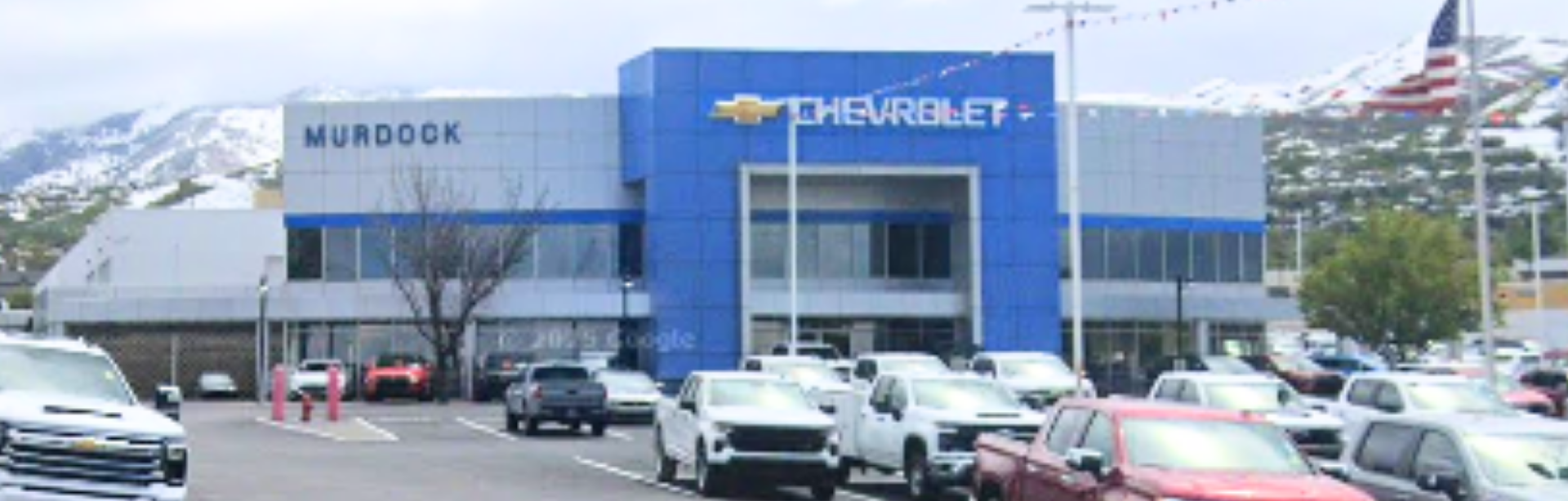
About Murdock Chevrolet
At Murdock Chevrolet, we provide an elite automotive experience for drivers in Woods Cross, Bountiful, Layton, and throughout the Salt Lake and Davis County areas. Our dealership is anchored by the Murdock family legacy that began in 1925, with our specific Woods Cross location serving the northern Utah community since 1982. We are proud to be a multi-generational family business, led by fourth-generation owners who have helped us rank among the top Chevrolet dealers in the state for both sales volume and customer satisfaction. Our commitment to the region extends beyond the lot through our support of local initiatives and our signature No Regrets promise that ensures every guest is treated like family. Whether you are visiting our state-of-the-art facility for a new vehicle or certified GM service, you can rely on over 40 years of local expertise to keep you moving forward.
Related Articles:
The Ultimate Guide to Finding the Best Chevrolet Dealer in Woods Cross, UT
0 comment(s) so far on Common Misconceptions About Leasing a Chevrolet—Clarified by Auto Experts